Bedding · Sleep comfort
Duvet Covers: How Closures and Internal Ties Shape Everyday Use
A duvet cover is a simple arrangement with a surprisingly active life: it is opened, filled, fastened, slept under, washed, and opened again. Buttons, zippers, and internal ties may seem like minor details, but they influence how smoothly that routine unfolds—and whether the insert stays where you put it.
Published November 18, 2026
Most bedding decisions begin with the senses. A fabric may feel crisp or brushed, cool or gently warm; a color may make a room seem more composed, or less so. Closures and ties are quieter considerations. They tend to announce themselves only when the cover is being changed, when a duvet has migrated into a corner during the night, or when a hard piece of hardware catches against a hand during laundry.
These small construction choices shape the practical character of duvet covers. A closure determines how the opening is secured and how readily the insert can be removed. Internal ties, when present, connect the insert to the cover at selected points to help limit bunching and drift. Neither feature can compensate for a badly matched size or an awkwardly handled wash, but together they can make a bedding routine feel either effortless or needlessly fiddly.
The best choice is not universal. It depends on the cover’s fabric, the insert’s weight and dimensions, how often the bed is made, and how much patience anyone in the household has for corners that refuse to cooperate. Looking at closure and tie design alongside care instructions can help reveal what a cover will actually be like to live with.
The opening: a small engineering problem
A duvet cover must hold its insert securely while still allowing access for removal. That sounds straightforward until the cover is spread across a bed: the opening needs to be wide enough for inserting a bulky duvet, secure enough not to gape, and practical enough to manage without turning a routine change into an extended wrestling match.
Closures are usually placed along one edge. Buttons and zippers are common; some covers use other fastenings, such as snaps or ties. Placement matters as much as the fastening itself. An opening across the foot can be easy to reach when the cover is laid flat, while a side opening may offer a different route for getting a large insert inside. The shape of the cover and the way its corners are finished also affect the process.
Before comparing fasteners, check that the cover and duvet are intended to work together in size. A cover that is too generous may leave room for the insert to slide around even if it has internal ties. One that is too small can strain at the seams and make fastening difficult. A close, appropriate fit is the foundation; closure details come after it.
Buttons: familiar, visible, and easy to inspect
Buttons have an almost domestic plainness. They are easy to understand, simple to inspect, and familiar from other parts of a household’s fabric life. A button closure can be secured one fastening at a time, and if a button comes loose, the problem is usually visible. For someone who prefers a closure that can be repaired with a needle and thread, that transparency has an appeal.
There are trade-offs. Buttoning takes a little attention, particularly when the opening is long or the buttons are small. Gaps between buttons can allow a glimpse of the insert, though a well-designed overlap or placket may reduce this. Buttons can also feel noticeable at the foot of the bed, depending on their size, material, and placement. During laundering, they may knock against the drum or other items; following the care label and closing the opening before washing can help keep the cover orderly.
Button construction varies. A flat button may sit discreetly, while a larger one can be easier to handle but more apparent. The stitching and fabric around each buttonhole deserve a look, too: repeated pulling concentrates strain at those points. If the cover is made from a delicate textile, gentle handling during fastening and laundering is sensible.
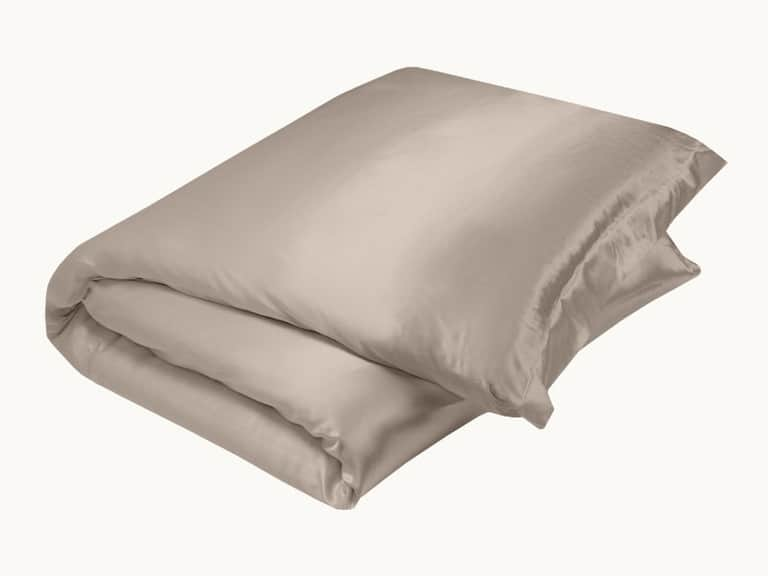
For a concrete example, the Blush Silk Duvet Cover uses a button closure and has a 19-momme mulberry silk construction with a three-inch border. Its care instructions call for a delicate wash at no more than 30°C, air drying, and cool ironing. That combination illustrates an important point: closure convenience should be considered alongside fabric care. A fastening can be sturdy and familiar, while the textile around it still calls for a lighter touch.
Zippers: quick access, with a few considerations
A zipper can make opening and closing a cover feel brisk. Instead of fastening a row of individual buttons, the user guides a slider along a track. For people who change covers frequently, or who simply appreciate a fast, continuous closure, this can be a practical advantage. A zipper can also create a relatively uninterrupted edge when it is properly covered by a fabric flap.
The details matter. A zipper’s size, position, and finish determine how it feels in use. A covered zipper may be less noticeable against the bed; an exposed one can be easier to grasp but more apparent. The slider should move smoothly without catching the fabric. If it is tugged sharply, or if cloth gets caught in its teeth, the result can be a snag or a damaged seam. Closing the zipper before washing may help prevent it from catching on other laundry, though the cover’s care label should guide the decision.
It is worth considering where the zipper sits relative to the sleeper. A fastening at the foot of the bed is generally less likely to meet a hand or face than one placed higher up, but preferences differ. A zipper is not automatically more comfortable or more durable than buttons; its performance depends on how it is made and treated. The best test is practical: can it be reached easily, does it close without strain, and does its placement suit the way the bed is used?
Internal ties: keeping the corners in conversation
Internal ties are short lengths of fabric or cord sewn inside a cover, usually near its corners and sometimes at additional points along the edges. They attach to loops or tabs on the duvet insert, helping the two layers move together. Their purpose is not to make shifting impossible. A sleeper can turn, pull, and compress bedding in ways no fastening can fully control. Ties simply reduce the freedom of the insert to wander.
When an insert has matching loops, ties can be especially useful. Fastening each corner helps keep the duvet distributed across the cover rather than collecting at the foot or slipping toward one side. Some covers have ties at all four corners; others add more along the sides. More attachment points can offer more control, but they also mean more small steps during a cover change. The sensible arrangement is the one that suits the size and weight of the insert without making the task tiresome.
There is a modest ritual to fitting the ties. Turn the cover inside out, reach into its corners, and secure the insert’s loops before turning the cover right-side out and settling the layers into place. If the insert does not have loops, the ties may be difficult or impossible to use as intended. Some people improvise a knot around an edge, but tight knots can stress fabric and may be awkward to undo. Check the construction of both pieces before relying on ties to solve a shifting problem.
Placement has consequences. Ties at the corners tend to address corner migration; additional ties along the sides can help distribute a larger insert. Ties that are too short may be awkward to reach, while very long ones can become tangled during handling. A secure attachment should hold without pulling the cover’s seams out of shape. Once tied, give each corner a light check before spreading the duvet across the bed.
Why closures and ties are different jobs
It is easy to treat a closure and internal ties as competing solutions to the same problem. They are not. The closure secures the opening; ties help position the insert inside. A buttoned or zippered cover may have no ties at all, and a cover with ties still needs an opening that can be fastened. One feature does not substitute for the other.
If the insert bunches into a lump, the first questions are usually about fit, attachment points, and how the cover was assembled—not whether its opening uses buttons or a zipper. If an opening comes undone, internal ties will not fix it. Thinking of each feature as having a distinct task makes comparison clearer and helps avoid expecting a single detail to solve every inconvenience.
Consider the whole sequence: the cover is removed, washed, dried, turned, fitted around the insert, attached at the corners, and fastened. A person who values fast changes may prefer a zipper. Someone who wants a familiar, inspectable fastening may lean toward buttons. Someone whose insert tends to slide may place greater importance on internal ties and matching loops. These preferences can coexist, but the priorities are not identical.
Fabric changes the experience
Closures are not experienced in isolation. A cotton percale cover, a linen cover, and a silk cover have different weights, textures, and care requirements. A fastening that feels unobtrusive on a substantial cotton fabric may seem more prominent on a lighter or smoother textile. A delicate fabric may benefit from careful, unhurried handling at the opening, whether that opening uses buttons or a zipper.
Fabric also affects how easily a cover slides over its insert. Some combinations move readily against each other; others have more grip. That friction can influence whether the duvet stays evenly distributed, although it is only one factor among many. The dimensions of the insert, the cover’s construction, and the movements of the sleeper all matter. A slippery feel is not a guarantee of shifting, just as a textured surface does not promise perfect stability.
Care instructions deserve equal attention. A cover that can be machine washed on a regular cycle may fit a different household routine from one that requires a delicate cycle, low heat, or air drying. Buttons should be checked periodically for loosened stitching. Zippers should be operated without forcing a caught slider. Ties should be untangled and secured gently. A little care at these stress points can help preserve the cover’s usefulness.
For instance, the BOVI Magnolia Duvet Cover is made from 100% cotton percale, described as breathable and machine washable, with a matte finish and a decorative border. Its published description does not specify a closure or internal ties, so those features should not be assumed. This is a useful reminder when comparing bedding: confirm construction details from the specific product information rather than inferring them from the fabric, appearance, or brand.
A practical comparison before choosing
When evaluating duvet cover closures, it helps to picture the actual moments of use rather than treating the fastening as a decorative specification. How often will the cover be changed? Does the insert have loops? Is the person changing it comfortable reaching into the corners? Is the fabric sturdy enough for frequent handling, or does it call for extra care? The answers will make some details more relevant than others.
- For quick opening: consider a zipper, and check that the slider moves smoothly and that the placement feels convenient.
- For simple inspection or repair: buttons may appeal, especially if they are securely stitched and easy to handle.
- For reducing insert drift: look for internal ties and confirm that the duvet has loops or another suitable attachment point.
- For delicate textiles: prioritize gentle handling and laundering instructions, regardless of the closure type.
- For an easier cover change: check the opening’s length and position, as well as the cover and insert dimensions.
It can also help to consider who will maintain the bedding. A fastening that seems obvious to one person may be fiddly for another. A longer opening, clearly placed ties, and easy-to-grip fasteners can make routine changes more manageable. No design is effortless for every household, but a close match between construction and habit can remove unnecessary friction.
A calmer routine, not a perfect one
Even a thoughtfully designed cover will occasionally need straightening. Inserts compress and shift; corners loosen; laundry has a way of turning a neatly folded cover into an unruly one. The aim is not to engineer bedding against every movement. It is to choose details that make the ordinary tasks—changing, fastening, washing, and settling the bed—more manageable.
Buttons offer a familiar, visible way to close an opening. Zippers can make that task faster, provided their placement and finish work well. Internal ties address a different concern, anchoring the insert at selected points so it is less likely to bunch or migrate. Fabric and care instructions shape how each feature feels over time, and correct sizing remains essential to the whole arrangement.
In the end, the most successful duvet cover is not necessarily the one with the most elaborate construction. It is the one whose opening, fasteners, ties, fabric, and care routine fit the life around the bed. When those details are aligned, they recede from notice. The duvet stays reasonably centered, the cover comes off without a negotiation, and the small mechanics of sleep return to being what they should be: quiet.